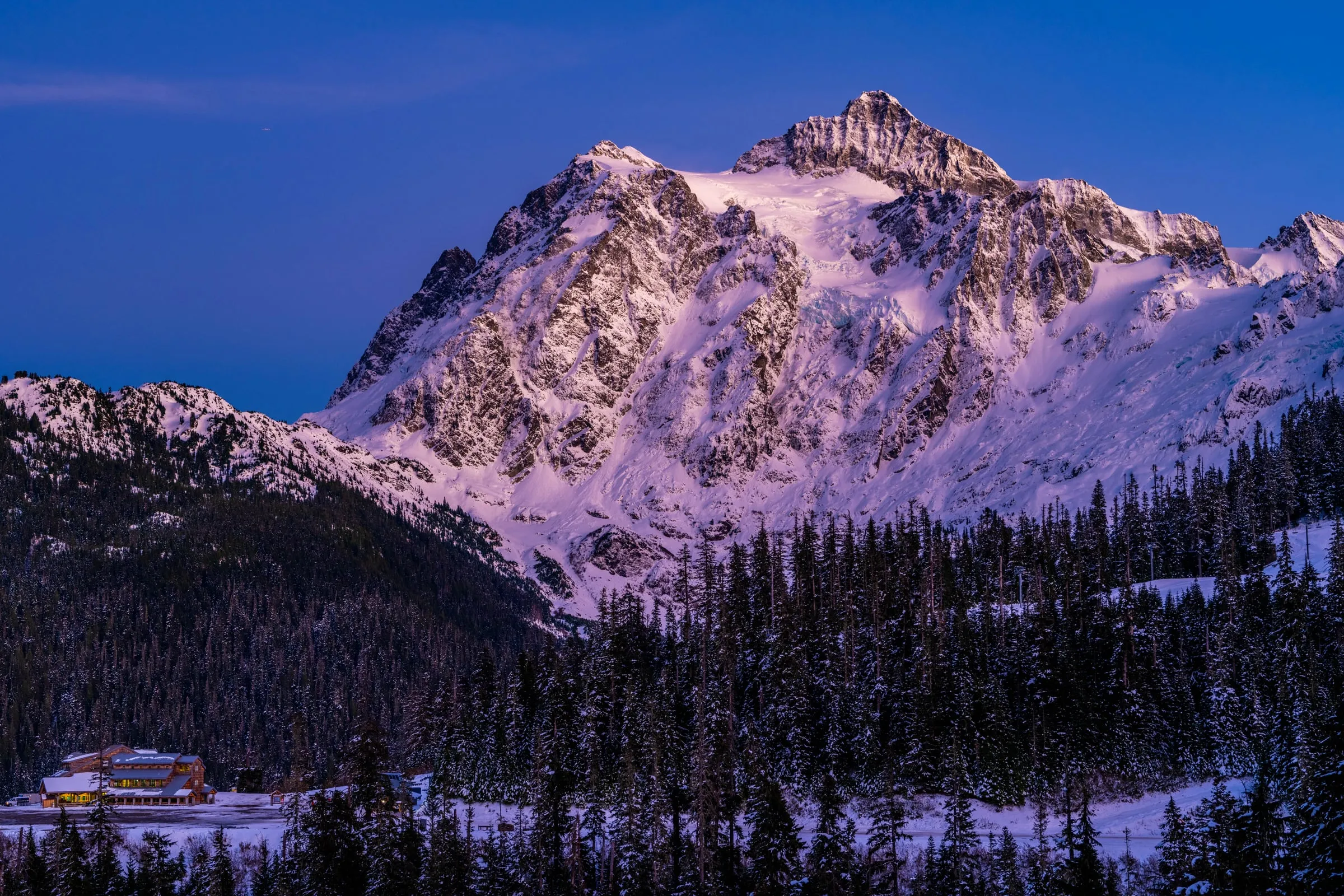
Earlier than almost everyone plans for. At Glacier, Washington, sunset falls at 4:11 p.m. through the second week of December, and useful light is gone by about 4:50. The lifts at Mt. Baker stop at 3:30 p.m., which sounds generous until you realise the state stops plowing the highway at the same hour and you still have 35 to 40 minutes of mountain road ahead of you.
We get asked this constantly between November and February, usually by people who booked a cabin for a ski weekend and want to know whether they can squeeze in Picture Lake on the way down. Here are the actual numbers, pulled today from the U.S. Naval Observatory for this valley, plus the three things the numbers do not tell you.
What time does the sun rise and set at Mt. Baker in winter?
Sunset at Glacier runs from 4:25 p.m. in mid-November down to 4:11 p.m. in early December, then climbs back past 5 p.m. by the start of February. Sunrise is the mirror image, latest at 8:01 a.m. around New Year. Civil twilight gives you roughly 35 to 38 extra minutes of workable light after the sun is down.
| Date | Sunrise | Sunset | Dark by |
|---|---|---|---|
| Nov 17 | 7:20 a.m. | 4:25 p.m. | 5:00 p.m. |
| Dec 1 | 7:40 a.m. | 4:13 p.m. | 4:50 p.m. |
| Dec 15 | 7:55 a.m. | 4:11 p.m. | 4:48 p.m. |
| Dec 21 | 7:59 a.m. | 4:13 p.m. | 4:51 p.m. |
| Jan 1 | 8:01 a.m. | 4:22 p.m. | 4:59 p.m. |
| Jan 15 | 7:56 a.m. | 4:39 p.m. | 5:15 p.m. |
| Feb 1 | 7:38 a.m. | 5:05 p.m. | 5:39 p.m. |
| Feb 15 | 7:16 a.m. | 5:28 p.m. | 6:01 p.m. |
| Mar 1 | 6:50 a.m. | 5:51 p.m. | 6:23 p.m. |
| Mar 15 | 8:21 a.m. | 8:13 p.m. | 8:45 p.m. |
“Dark by” is the end of civil twilight, the point at which you need a headlamp to read a map. The daylight those rows add up to: 9 hours 5 minutes on November 17, 8 hours 14 minutes on the solstice, 10 hours 12 minutes by mid-February and 11 hours 1 minute on March 1.
All times Pacific, computed for Glacier (48.89° N, 121.94° W) by the U.S. Naval Observatory, read November 17, 2026. March 15 looks wrong until you remember daylight saving time starts on March 14, 2027 and the whole column jumps an hour. Up at the ski area the flat-horizon times run one to two minutes earlier than Glacier, which is not the difference that matters. The mountains are.
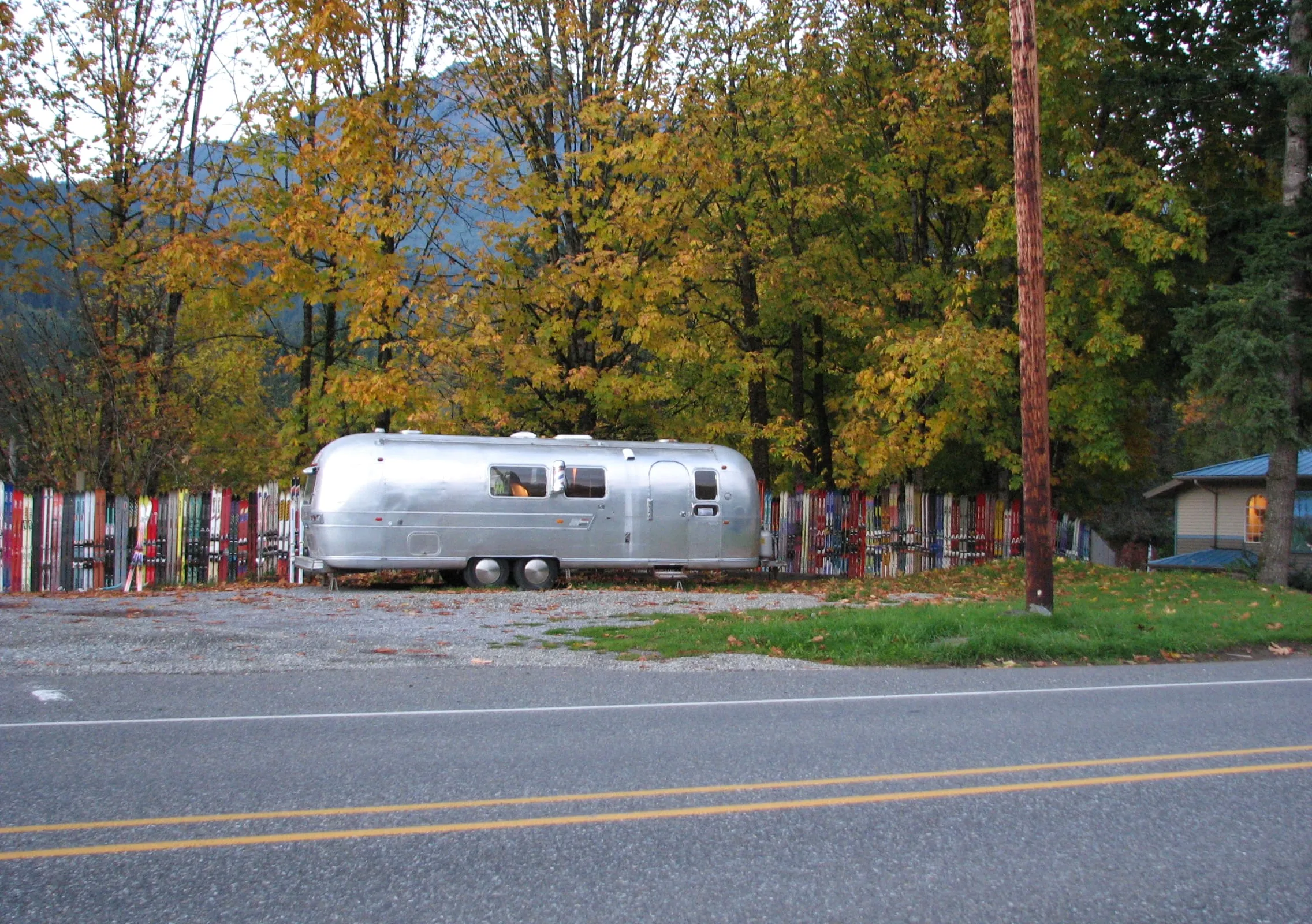 The Mt. Baker Highway through Glacier, 906 feet above sea level and 3,400 feet below the Heather Meadows base. Published sunset times are computed for a flat horizon; a valley floor like this one loses the sun well before them. Photo: Steven Pavlov, CC BY-SA 4.0, via Wikimedia Commons. Edited.

When is the earliest sunset, and is it the shortest day?
No, and this surprises people every year. The earliest sunset of the winter is 4:11 p.m., and it lands between December 6 and December 16 — ten days or more before the solstice. The latest sunrise, 8:01 a.m., does not arrive until the week after Christmas and holds into the first week of January. The shortest day itself, around December 21, runs 8 hours 14 minutes.
Those three events are genuinely separate, because the sun’s clock drifts against ours over the winter. The practical version: afternoons stop getting shorter in the first week of December, but mornings keep getting darker until after New Year. If you are booking a trip around daylight, early December buys you a better morning and late January buys you a much better afternoon.
How high does the sun actually get at Mt. Baker in December?
Barely. At solar noon on December 21 the sun reaches 17.7° above the horizon at this latitude, and by the time the lifts stop at 3:30 p.m. it is down to about 4.6°. For most of a midwinter day the sun is lower than a moderately steep ski run.
| Time (Dec 21) | Sun’s altitude | Direction |
|---|---|---|
| 9:00 a.m. | 6.6° | southeast |
| 10:00 a.m. | 12.4° | southeast |
| 12:06 p.m. (solar noon) | 17.7° | due south |
| 2:00 p.m. | 13.3° | southwest |
| 3:30 p.m. | 4.6° | southwest |
Those figures come from the Naval Observatory’s celestial navigation data for the same coordinates, read today. They explain more about a winter day here than the sunset time does, and they are why the valley floor and the ski runs behave so differently from each other.
Why does the valley go dark before the sky does?
Because terrain blocks a low sun long before the horizon does. A ridge that rises 2,000 feet in a mile sits about 21° above you, and a 17.7° sun never clears it. Glacier sits at 906 feet with slopes going up thousands of feet on both sides, so in late December the valley floor is in shadow for much of a day that is technically still daylight.
This is the part no almanac tells you, and it cuts both ways. The cabins and the towns lose direct sun early and keep a long, flat blue twilight. The ski area, 3,400 to 4,300 feet higher and out on open slopes, holds real light later than the valley does and then loses it all at once. The shot at the top of this page is the honest version: Mount Shuksan still lit at 4:50 p.m. while the lodge below it already has its lights on.
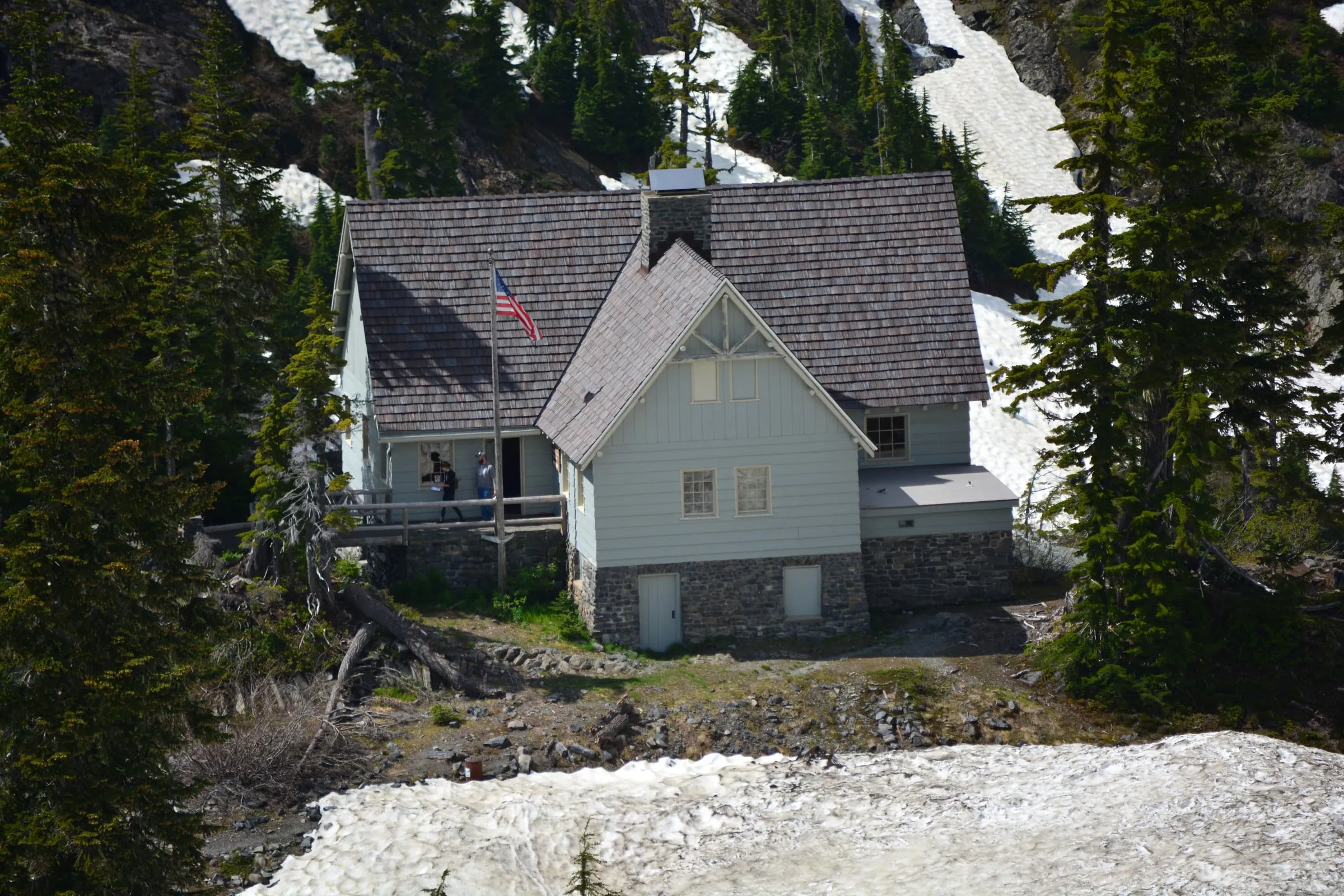 Heather Meadows, 4,300 feet, the top of the plowed highway all winter. Up here the light holds later than it does in Glacier, and then goes quickly. Photo: Joe Mabel, CC BY-SA 4.0, via Wikimedia Commons. Edited.

What does this mean for a ski day at Mt. Baker?
The mountain’s hours are fixed and they are not generous. Mt. Baker’s own FAQ states it plainly: “Ski area hours of operation are 9:00AM – 3:30PM.” There is no night skiing as a standing option, so 3:30 is the end of the day, roughly 40 minutes before the sun sets in late December.
The sequence that catches people out is what happens next. You are at 4,300 feet at 3:30 p.m., the sun is already at about 5°, and it is 35 to 40 minutes of switchbacks down to Glacier. Leave the lot at 4:00 and you are driving the top half of that road in failing light. Leave at 4:30 and you are driving all of it in the dark.
| What happens | When |
|---|---|
| Lifts stop | 3:30 p.m. |
| WSDOT stops plowing SR 542 | 3:30 p.m. |
| Sunset (late December) | about 4:13 p.m. |
| Headlights legally required | half an hour after sunset |
| Last usable light | about 4:50 p.m. |
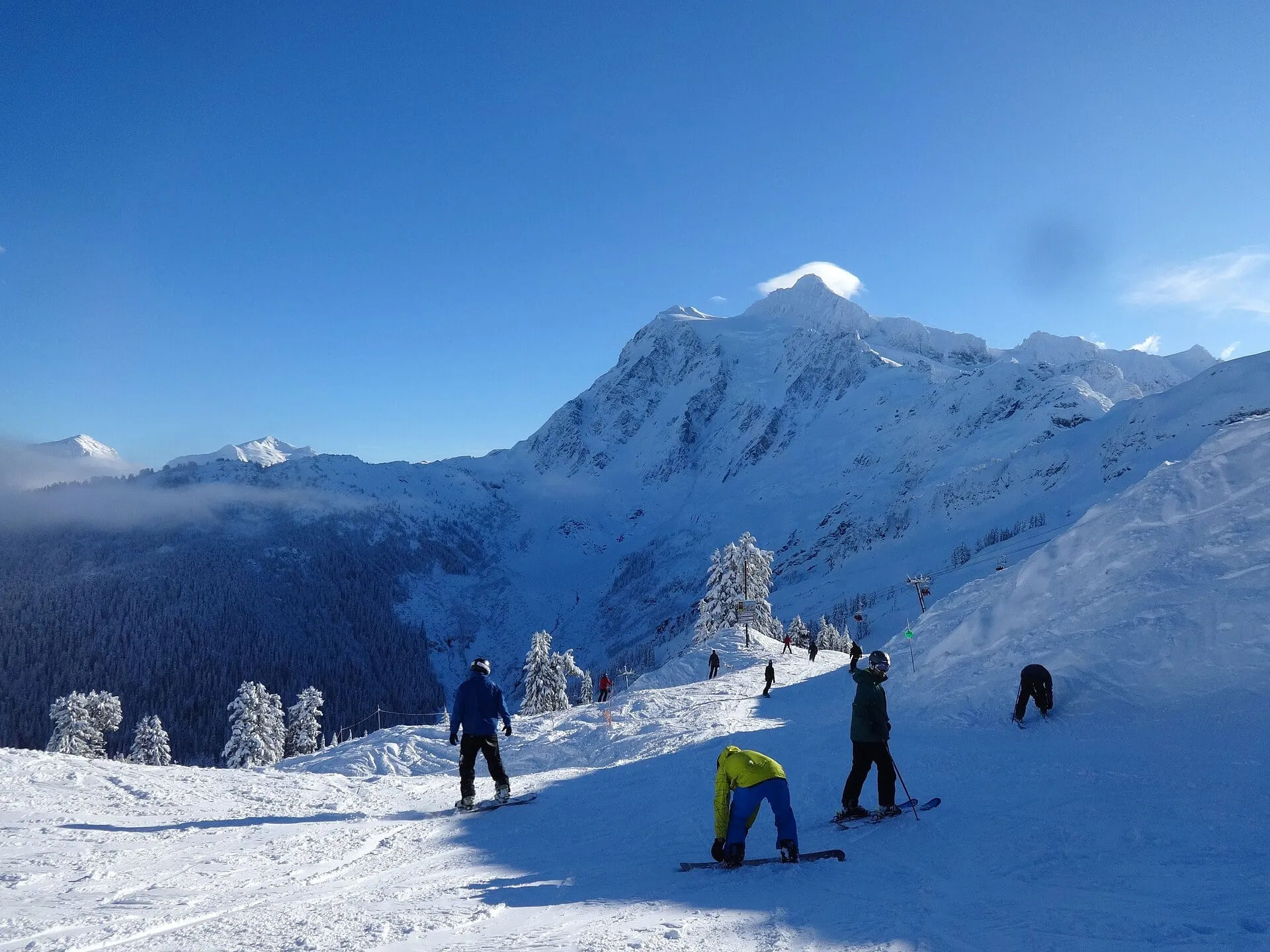 Last chair is 3:30 p.m. all season. In late December that is the better part of an hour before the light goes. Photo: Kaleodu, CC0, via Wikimedia Commons. Edited.

What about the drive down in the dark?
Treat 3:30 p.m. as the moment the road stops improving. The ski area’s own overnight-parking page says it outright: “The WSDOT does not plow the highway past 3:30 pm, and there can be a lot of snowfall after that time.” Anything that falls during the last hour of lift operations is still there when you drive out, on top of a surface that is refreezing as the temperature drops.
Four things follow from that, and none of them are optional:
- Headlights are a legal requirement, not a judgement call. RCW 46.37.020 requires lights “from a half hour after sunset to a half hour before sunrise,” and any other time visibility is under 1,000 feet. In late December that clock starts at about 4:43 p.m.
- There is no lighting on the upper highway. None. Past Glacier it is your headlights, reflective markers and whatever the moon is doing.
- Your phone will not help you. Service dies around Kendall with pockets in Glacier, which is covered in full in our guide to cell service on the Mt. Baker Highway. Download the map before you leave the cabin.
- The refreeze is the real hazard. Wet pavement at 3:30 p.m. is ice at 5:00 p.m. Our chains and winter driving guide covers what Washington actually requires in the posted zones, and the live picture is always on our road conditions page.
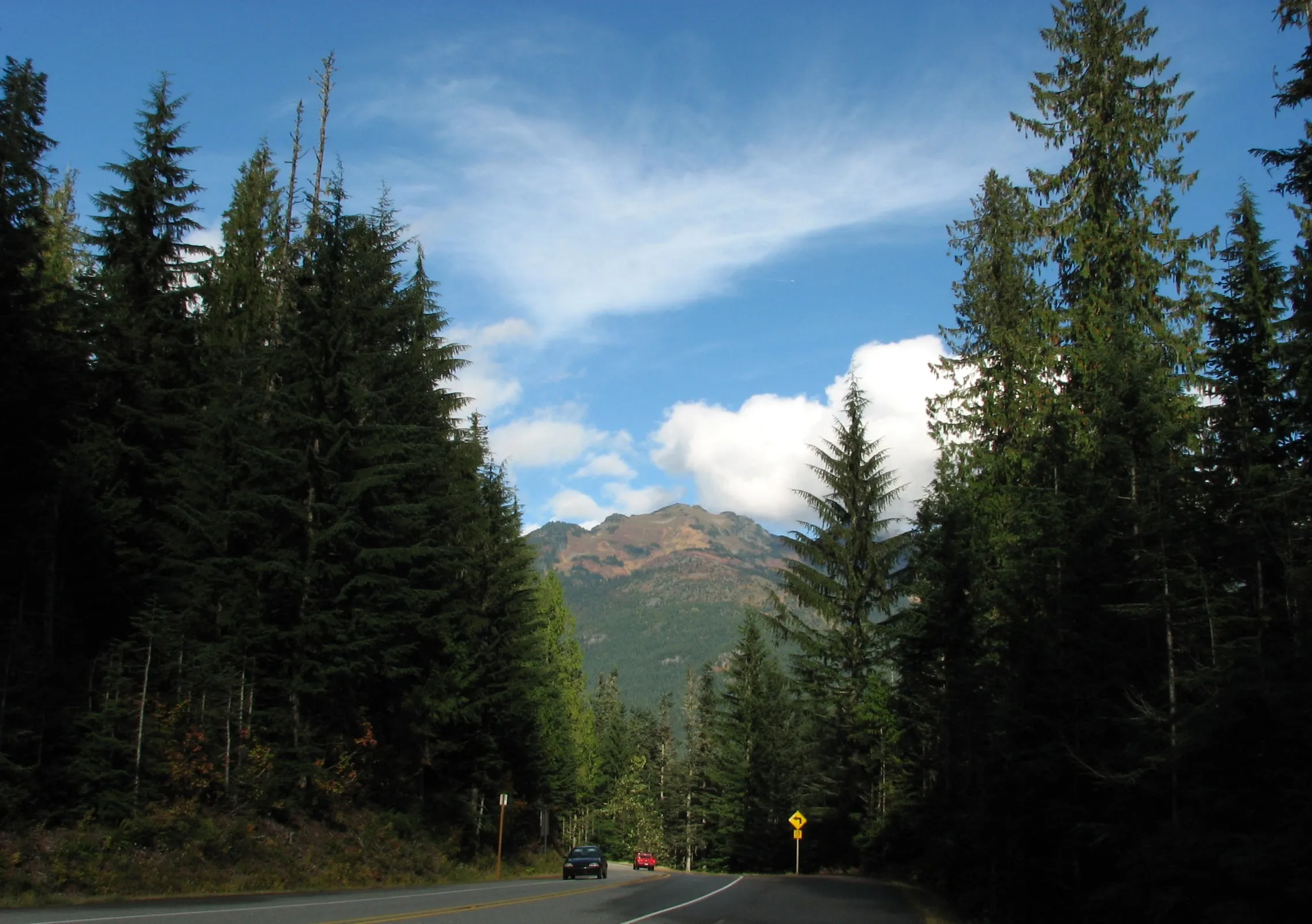 The upper highway in daylight. There is no lighting on any of this, and after 3:30 p.m. in winter nobody is plowing it either. Photo: Steven Pavlov, CC BY-SA 4.0, via Wikimedia Commons. Edited.

When do you need to turn around on a winter walk?
Work backwards from 4:50 p.m. in December, not from sunset, and subtract the time it takes to get back to the car. That gives most people a turn-around time somewhere around 2:30 p.m. on a short winter outing, and earlier if the trail is unbroken.
Snowshoeing and touring add a trap the summer version does not have: trail-breaking is slow, and a track you made on the way in fills back in during a storm. Carry a headlamp on every winter outing here regardless of how short it looks, because the difference between finishing in twilight and finishing in the dark is about twenty minutes. Our winter hikes near Mt. Baker guide covers which low-elevation trails are actually walkable when the snow line drops.
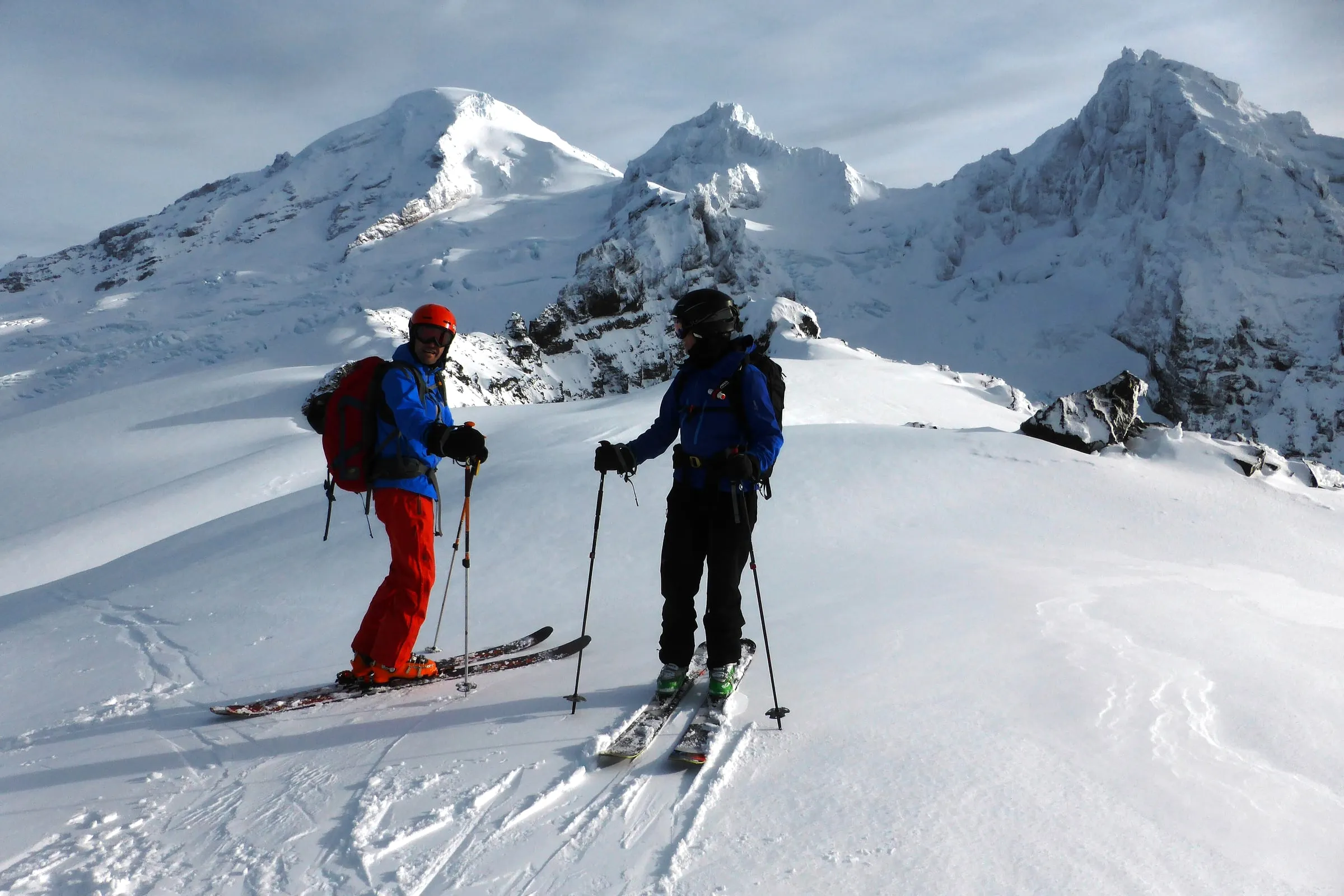 Out of the ski area boundary, the light clock is the whole plan. Photo: kcxd, CC BY 2.0, via Wikimedia Commons. Edited.

Is it worth staying out for the light?
Yes, and this is the compensation for everything above. A 17.7° sun means the whole short day is low-angle light, and the alpenglow window on Shuksan after the official sunset runs longer here than it does in flatter country. The catch in winter is access: the final 2.7 miles of SR 542 to Artist Point are gated from late October until summer, so the best evening viewpoint on this highway is not reachable by car. We track the gate on our Artist Point road status page.
What is reachable all winter is Picture Lake at milepost 54, where the plowed highway loops past the Shuksan reflection. Our Picture Lake photography guide covers how the light moves across that face through the year.
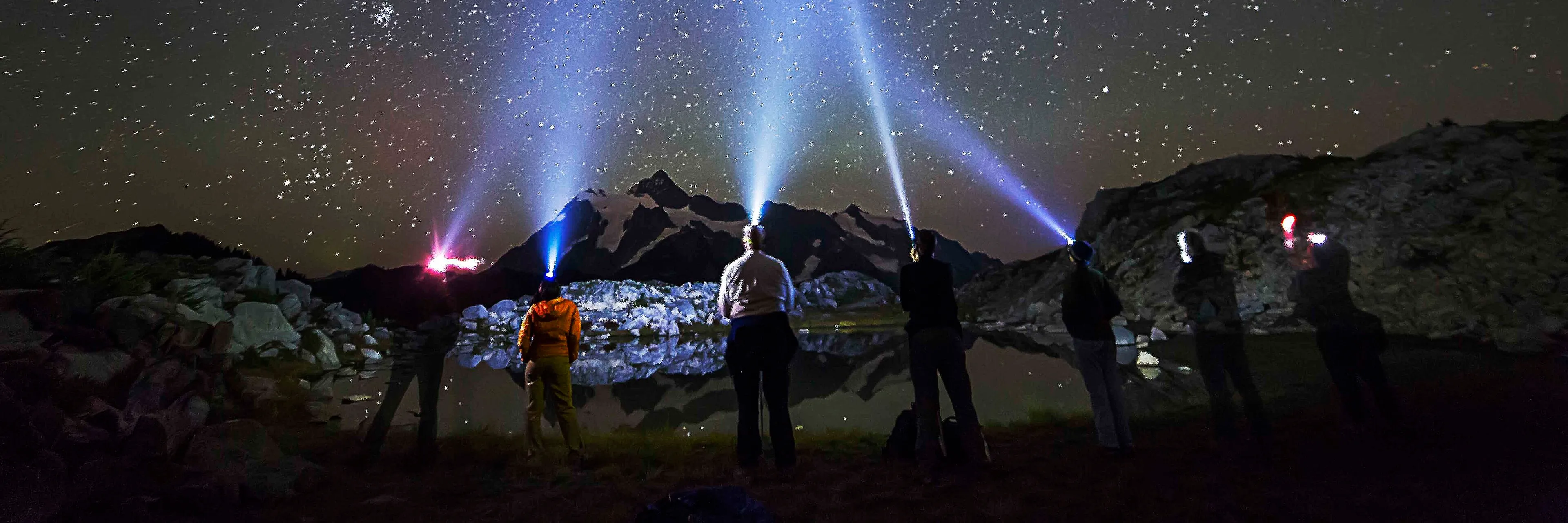 Artist Ridge after dark — but note the season. This is summer, when you can still drive the last 2.7 miles. In winter that gate is shut. Photo by Andy Porter for the U.S. Forest Service, Pacific Northwest Region, public domain.

Which nights have a full moon this winter?
Moonlight genuinely changes how dark this valley is, and on a clear full-moon night with snow on the ground you can walk the river trails without a headlamp. The full moons through the 2026-27 winter, converted to Pacific time from USNO’s phase data:
| Full moon | Pacific time |
|---|---|
| November 24, 2026 | 6:53 a.m. |
| December 23, 2026 | 5:28 p.m. |
| January 22, 2027 | 4:17 a.m. |
| February 20, 2027 | 3:23 p.m. |
| March 22, 2027 | 3:44 a.m. |
The December 23 one is the pick of them. The moon is full at dusk on the longest nights of the year, which is about as good as midwinter gets up here.
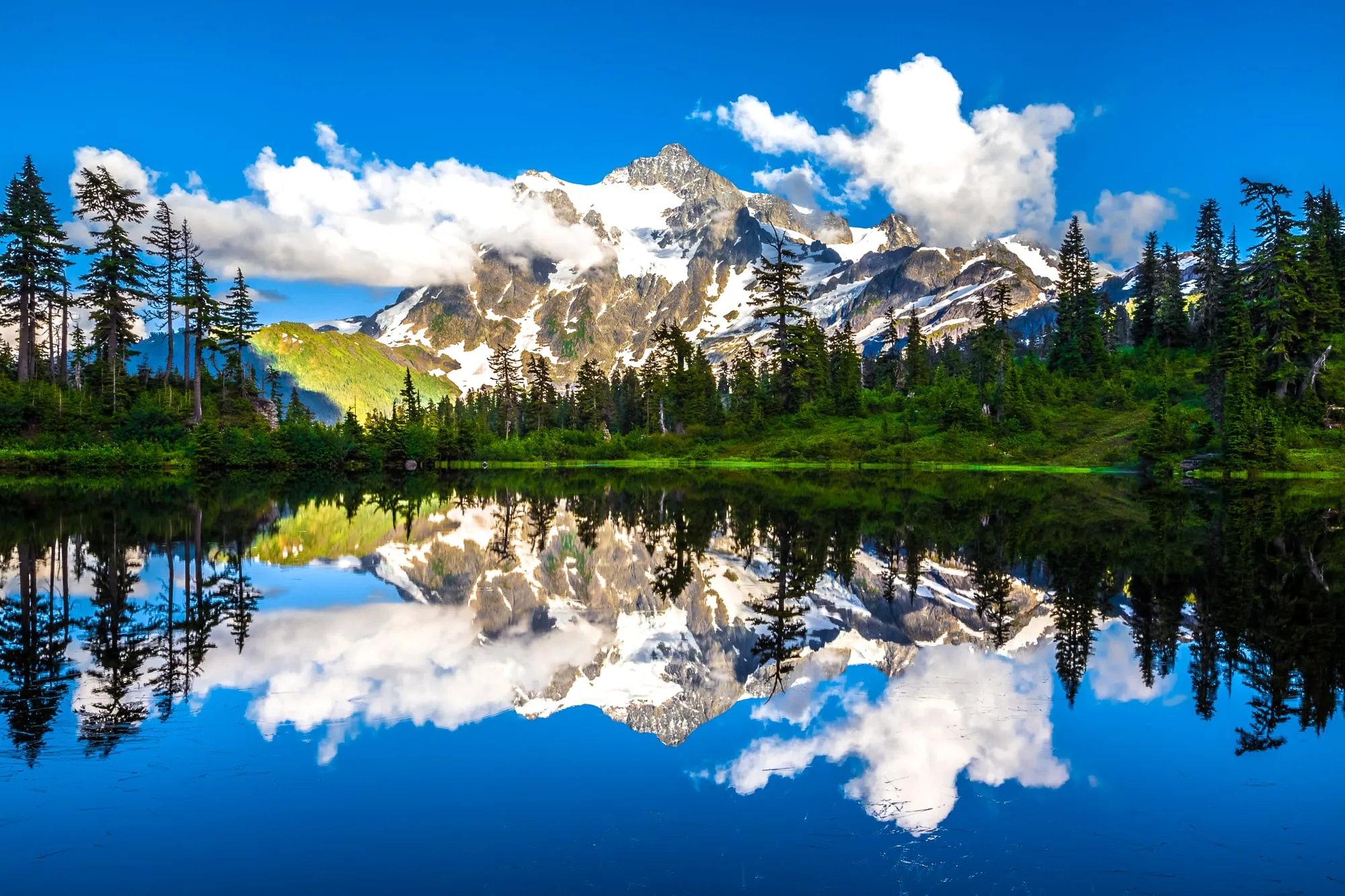 Evening light on Shuksan from Picture Lake, photographed in summer. In December this same scene happens around 4 p.m., and the lake is under snow. Photo: U.S. Forest Service, Pacific Northwest Region, public domain.

What time should you actually arrive at the cabin?
Before 4 p.m. in December, and that is not a sales pitch — it is the sunset time. Check-in at both our cabins is 4:00 p.m., which in the second half of December is within a couple of minutes of sunset. Arriving in daylight means you find the driveway, the parking and the hot tub cover while you can still see them.
The other half of it is the drive. From The Black Cedar in Glacier the ski area is about 40 minutes, and from The Little Red Cabin in Maple Falls it is 45. Staying down in Bellingham turns a 40-minute dark drive into an hour and three-quarters of one, which is the single strongest argument for staying up the valley in winter. We lay out the tradeoffs between the towns in our Mt. Baker lodging guide.
One more detail that only matters in winter: both cabins have hot tubs, and a 4:15 p.m. soak in the dark with snow on the deck is the correct use of a short day. The Black Cedar adds a cedar barrel sauna, which is the better answer when it is raining at 900 feet rather than snowing.
Sources
- U.S. Naval Observatory, Sun and Moon data for one day — all sunrise, sunset and civil twilight times, computed for 48.89° N, 121.94° W, read November 17, 2026
- U.S. Naval Observatory, celestial navigation data — solar altitude and azimuth figures for December 21, 2026, read November 17, 2026
- U.S. Naval Observatory, phases of the moon — full moon times, converted from UT to Pacific
- Mt. Baker Ski Area mountain info FAQ — “Ski area hours of operation are 9:00AM – 3:30PM”, read November 17, 2026
- Mt. Baker Ski Area overnight parking, occupied vehicles — the WSDOT plowing cutoff, read November 17, 2026
- RCW 46.37.020 — Washington’s headlight requirement
- Cabin drive times and check-in from our own property data; valley-shadow observations are ours, from living here