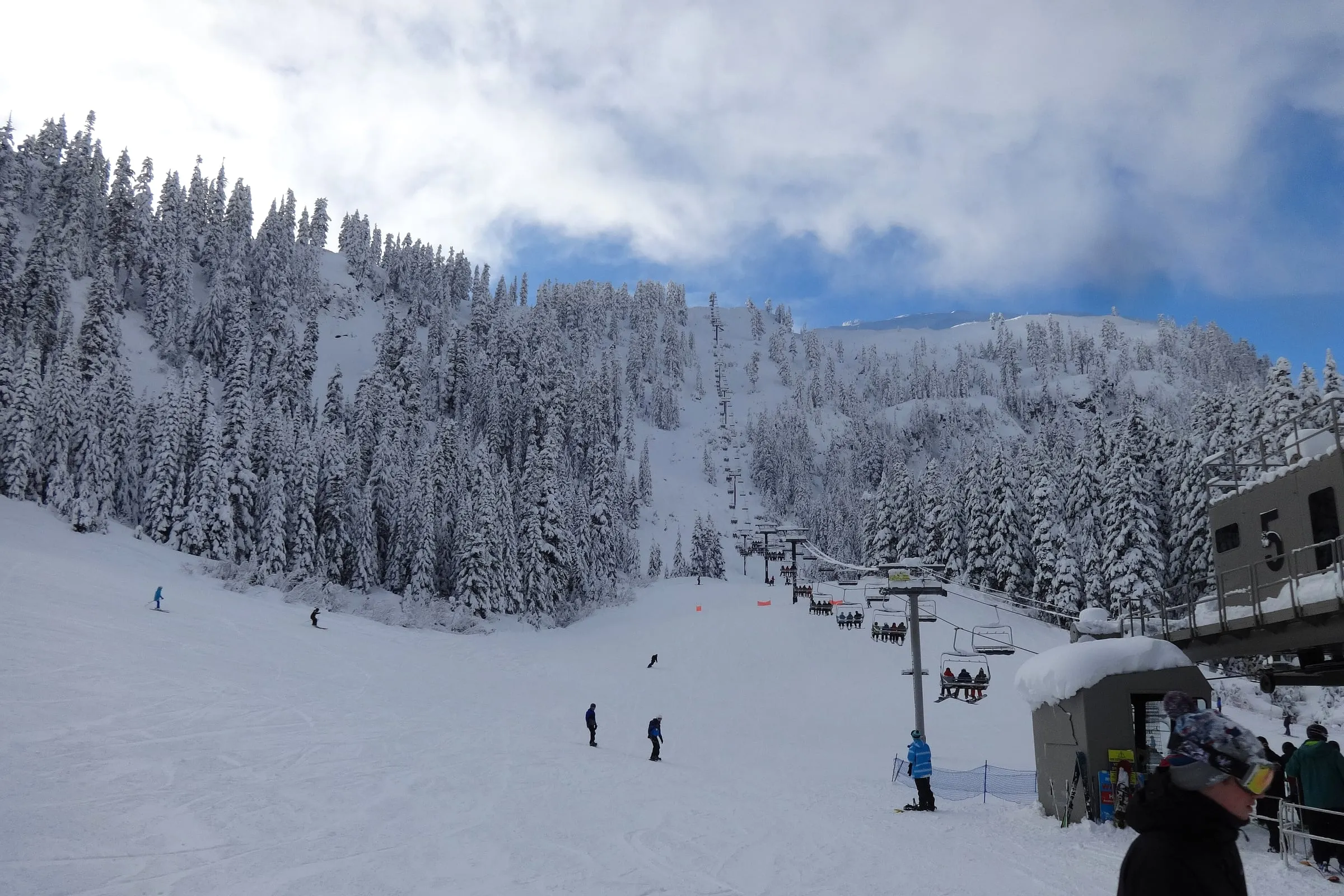
A tree well is the pocket of loose, unconsolidated snow that forms under a conifer’s low branches, roofed over and invisible from above. Fall into one headfirst and you usually cannot get out on your own. Snow immersion suffocation has killed more people inside US ski area boundaries than avalanches have, and Mt. Baker — deep, snowy and forested from base to summit — is exactly the kind of mountain where it happens. The prevention is free: keep your partner in sight.
We write a lot here about the things that go wrong on the way to the mountain — chains, the road, the weather. This one goes wrong on the mountain itself, inside the ropes, on an ordinary powder day, and it is the hazard our guests are least likely to have heard of. So here is the whole thing, with the numbers, from the people who collect them.
What is a tree well, exactly?
The low branches of a fir or hemlock hold falling snow off the ground and form an airy void around the trunk. Those same branches hide it. A skier or rider who clips the tree, or stops too close, slides in through the downward-bending branches, often inverted, and a load of snow comes down off the branches with them.
Getting out is harder than getting in for a simple mechanical reason: the branches bend downward. They let you through going in and resist you coming out. Paul Baugher’s 2012 study for the Northwest Avalanche Institute puts it plainly — “the victim passes through more easily with the downward bending branches then trying to come out against them” — and draws the practical lesson from it: grab the branches to stop yourself inverting.
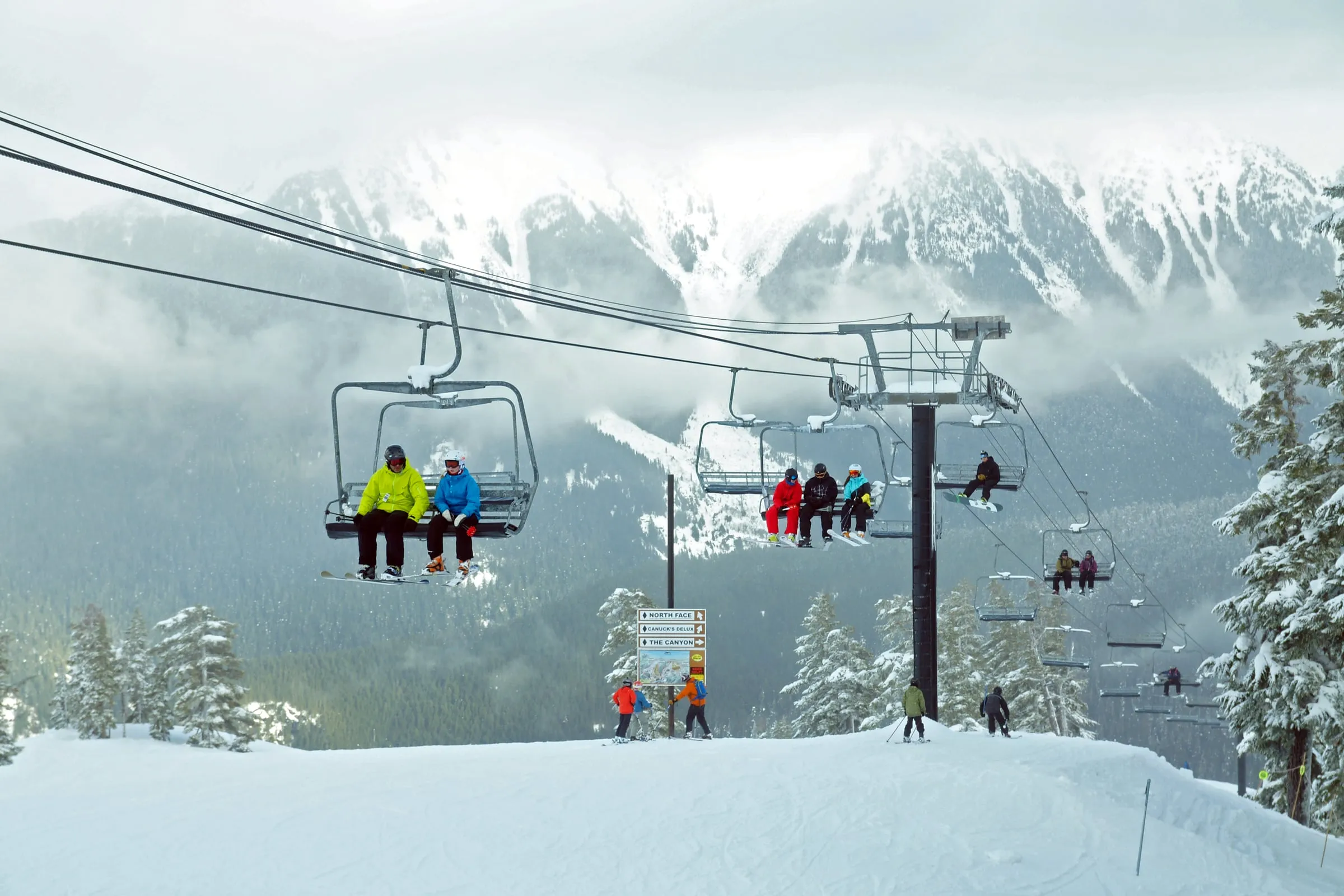 Mt. Baker’s runs thread through timber for most of their length. The hazard is not somewhere exotic — it is three metres off the side of a named blue run. Photo: kallerna, CC BY-SA 3.0, via Wikimedia Commons. Edited.

Tree wells are the most common version, not the only one. Baugher’s dataset puts trees in roughly 70% of cases; the rest are immersions in deep open snow, often around rocks and drainages. The umbrella term for the whole category is snow immersion suffocation, or SIS.
Is it really more dangerous than an avalanche?
Inside a ski area’s boundary, yes, by a wide margin. Across the 22 seasons Baugher analysed, 1990/91 to 2011/12, US ski areas recorded 64 SIS cases against 9 in-bounds avalanche fatalities. His conclusion: “the risk to in bounds skiers and snowboarders of snow immersion suffocation is six times greater than the risk of avalanches.”
| At US ski areas, 1990/91–2011/12 | Cases |
|---|---|
| Snow immersion suffocation | 64 |
| Avalanche, in bounds | 9 |
| Avalanche, ticketed skiers who left the boundary | 60 |
Read that third row with the second. Modern avalanche control has made the inbounds snowpack remarkably safe — that is what the 9 represents, and it is a genuine success story. What it has not touched is the snow itself. Of 71 documented US cases in Baugher’s database, only two, about 3%, happened outside a developed ski area boundary. This is an inbounds problem that looks like a backcountry problem.
Two more figures from the same work, because they cut against the usual assumptions. Skiers and snowboarders are affected about equally — 22 skiers and 23 snowboarders in the dataset. And SIS accounted for roughly one in ten alpine skier deaths and one in seven snowboarder deaths at US ski areas when cross-referenced with National Ski Areas Association data.
One honest caveat: that study is from 2012 and remains the most complete public dataset anyone has published. Newer cases exist and the ski industry has got better at education since. The underlying physics has not changed at all.
Why is Mt. Baker a textbook mountain for this?
Because of its elevation. Mt. Baker Ski Area tops out at 5,089 feet at the top of Chair 8, which in the North Cascades is well below treeline, so there is timber on essentially the whole mountain. Add the snowfall and you have what Baugher names as the prime environment: “a steep, thick coniferous forest, combined with deep powder.”
| Mt. Baker Ski Area | Elevation |
|---|---|
| Top of Chair 8 | 5,089 ft |
| Panorama Dome | 5,000 ft |
| Heather Meadows base | 4,300 ft |
| White Salmon base | 3,500 ft |
| Vertical rise | 1,500 ft |
Figures from the ski area’s mountain stats page, checked November 24, 2026. Compare a Rockies resort where the top third of the mountain is bald alpine: there, trees are a zone you choose to enter. Here, 1,000 acres of terrain served by eight quads and two handle tows sits inside the forest, and the trees are simply the edges of every run you ski.
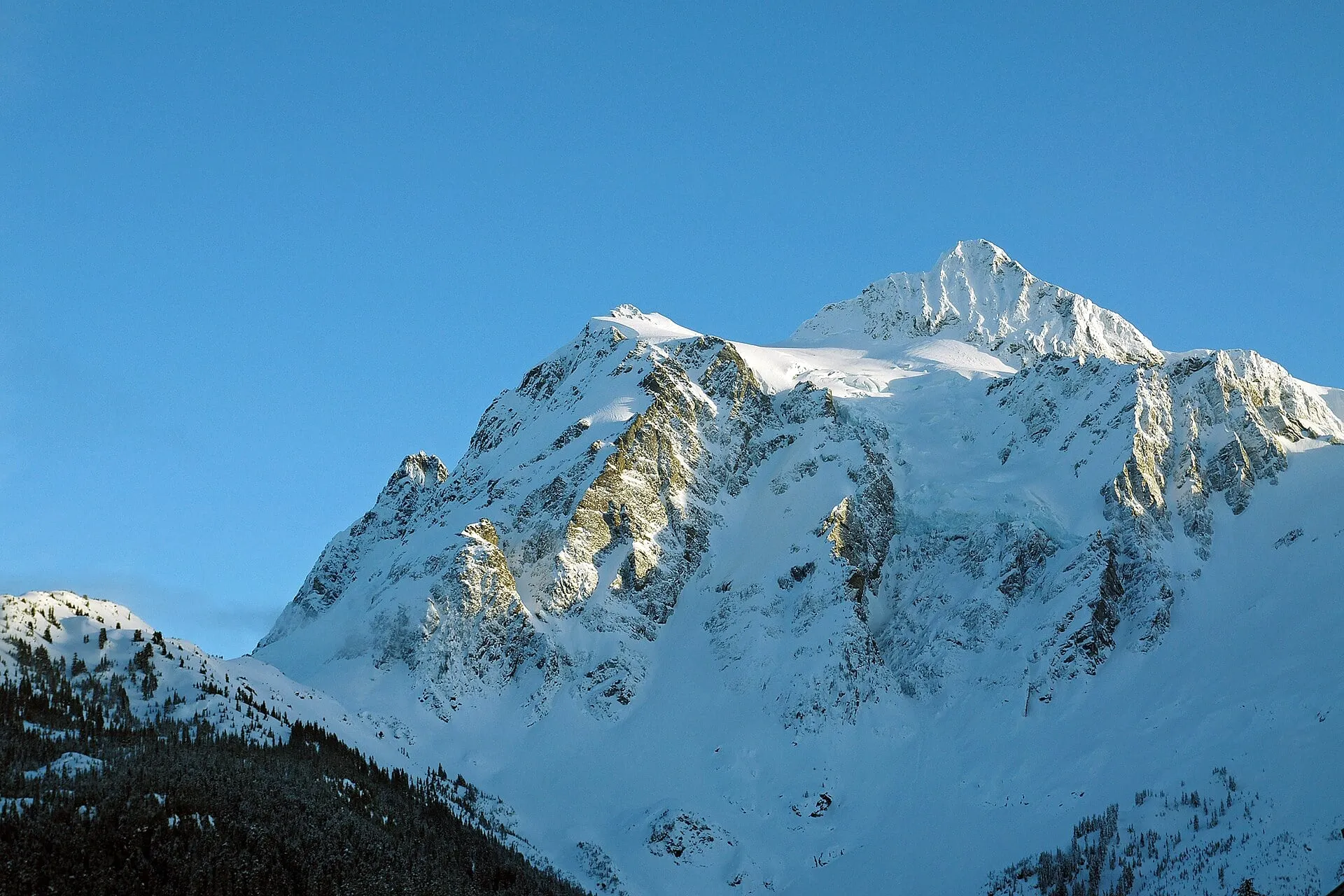 The other ingredient. Mt. Baker holds the world single-season snowfall record and makes none of it artificially, so what falls stays loose until it consolidates. Photo: kallerna, CC BY-SA 3.0, via Wikimedia Commons. Edited.

The no-snowmaking part matters more than it sounds. A mountain that grooms machine-made snow builds a dense, settled base early. Mt. Baker’s base is whatever fell out of the sky and whatever has had time to set.
When is the risk highest?
December and January, which together account for 40% of recorded accidents — specifically, in Baugher’s words, “when the snowpack is generally weak and the base of tree wells have not had a chance to consolidate.” Risk then spikes again after any very large storm; he flags 2 metres or more of new snow inside 48 hours as the clearest danger signal.
That makes the next few weeks the sharp end of the season rather than the gentle start of it, and this year the calendar makes the point for us. As of the ski area’s snow report on November 23, 2026, the slopes were still CLOSED, with 14 and 20 inches on the two base measurements and opening day unscheduled — the mountain publishes that it needs somewhere between 20 and 40 inches of base depending on snow quality. (Check the current report before you drive; this page is not a live status.)
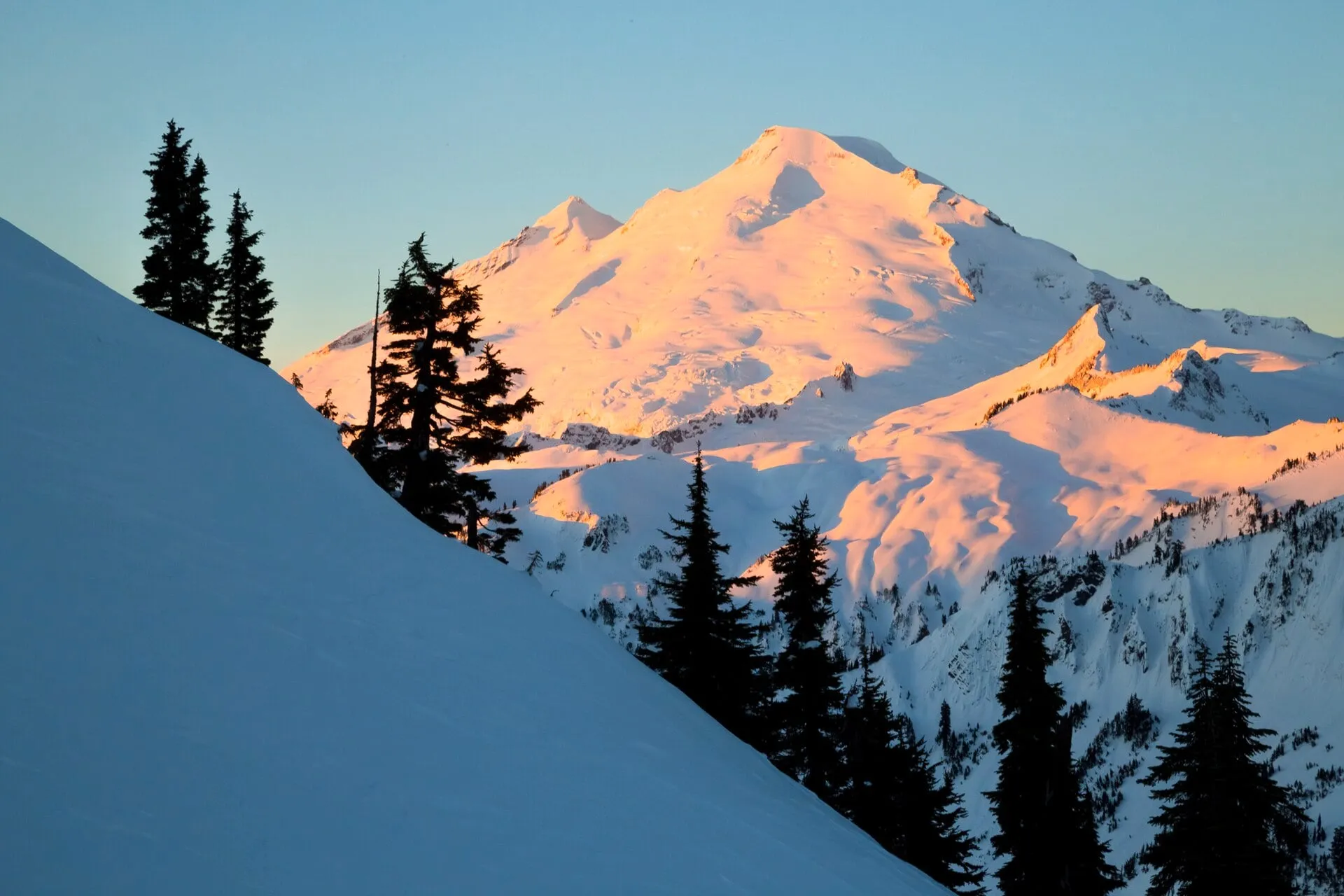
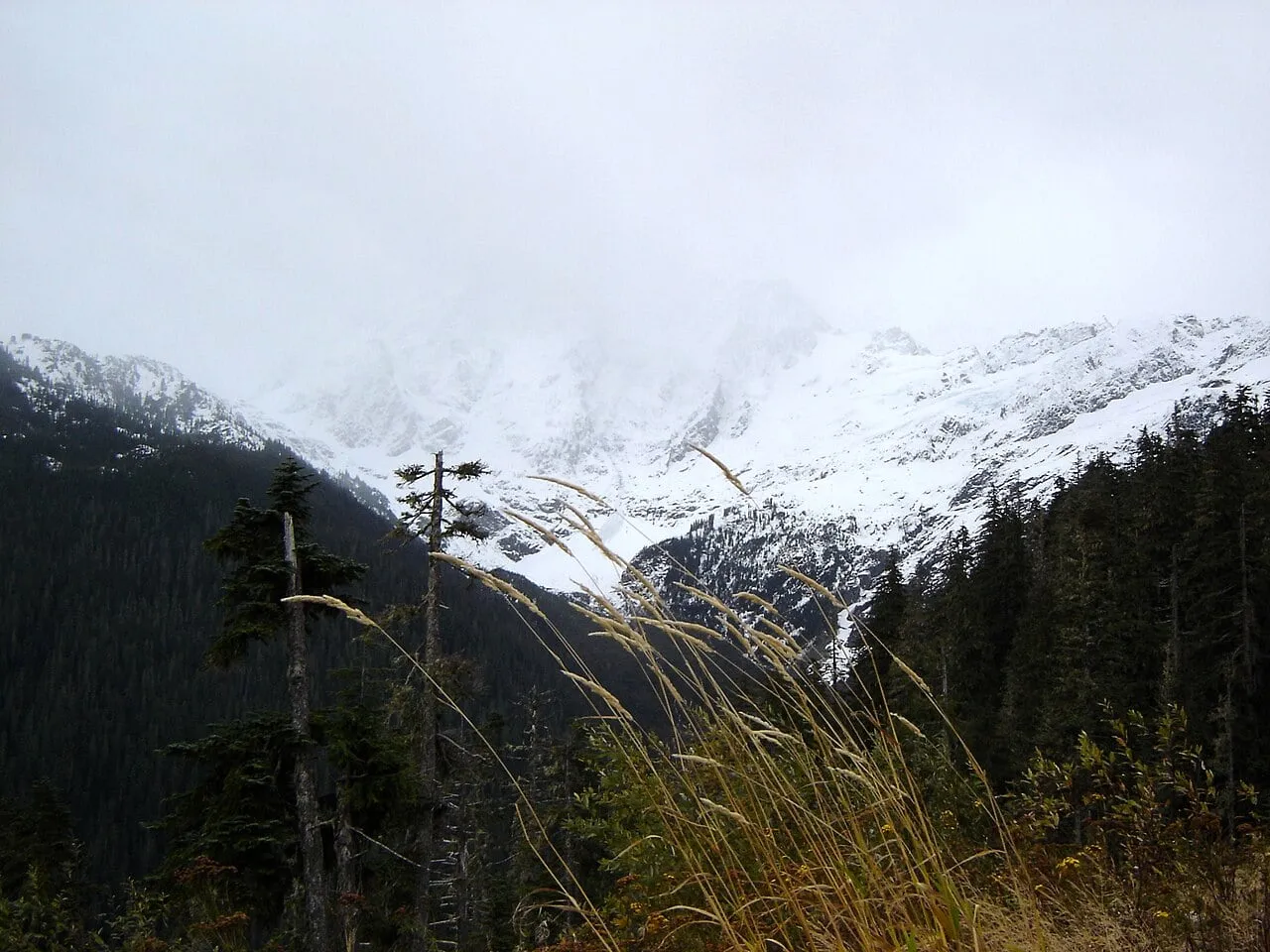 Early-season snow above the ski area. A thin, unconsolidated base over rocks, stumps and the open voids under trees is the exact condition the December–January statistic describes. Photo: Chanilim714, CC BY-SA 3.0, via Wikimedia Commons. Edited.

So the mountain will open on a young snowpack into the two months that carry 40% of the risk. That is not a reason to stay home. It is a reason to ski with someone and to give the trees more room than you would in March.
What does Mt. Baker Ski Area itself tell you to do?
Four things, and it has put them in capitals: “KEEP YOUR PARTNER IN SIGHT and AVOID TREE WELLS.” The ski area’s tree well advisory and its deep snow advisory both say the hazard can be reduced or eliminated by staying on groomed runs, and both point readers to deepsnowsafety.org.
That last detail is worth knowing. deepsnowsafety.org is the national education site for this hazard, and Baugher’s paper records that it was developed with Gwyn Howat of Mt. Baker Ski Area. The people who run this mountain helped write the country’s guidance on the thing this mountain is good at producing.
The rest of the ski area’s mountain safety guidance is the practical half:
| If you need help | What the ski area publishes |
|---|---|
| Ski patrol phone | (360) 300-7070, monitored approximately 7:30 a.m.–4 p.m., subject to change |
| Cell coverage | “There is NO CELL SERVICE IN SOME AREAS in and around the ski area”; terrain affects reception and cold affects battery |
| If you are lost | Drop a pin and text it to patrol; transmission is affected by terrain |
| Beyond the ropes | “TREAT THIS AREA LIKE BACKCOUNTRY AT ALL TIMES” — no patrol, no medical response |
Put the patrol number in your phone in the parking lot, not when you need it. Coverage in the corridor is bad long before you reach the lifts.
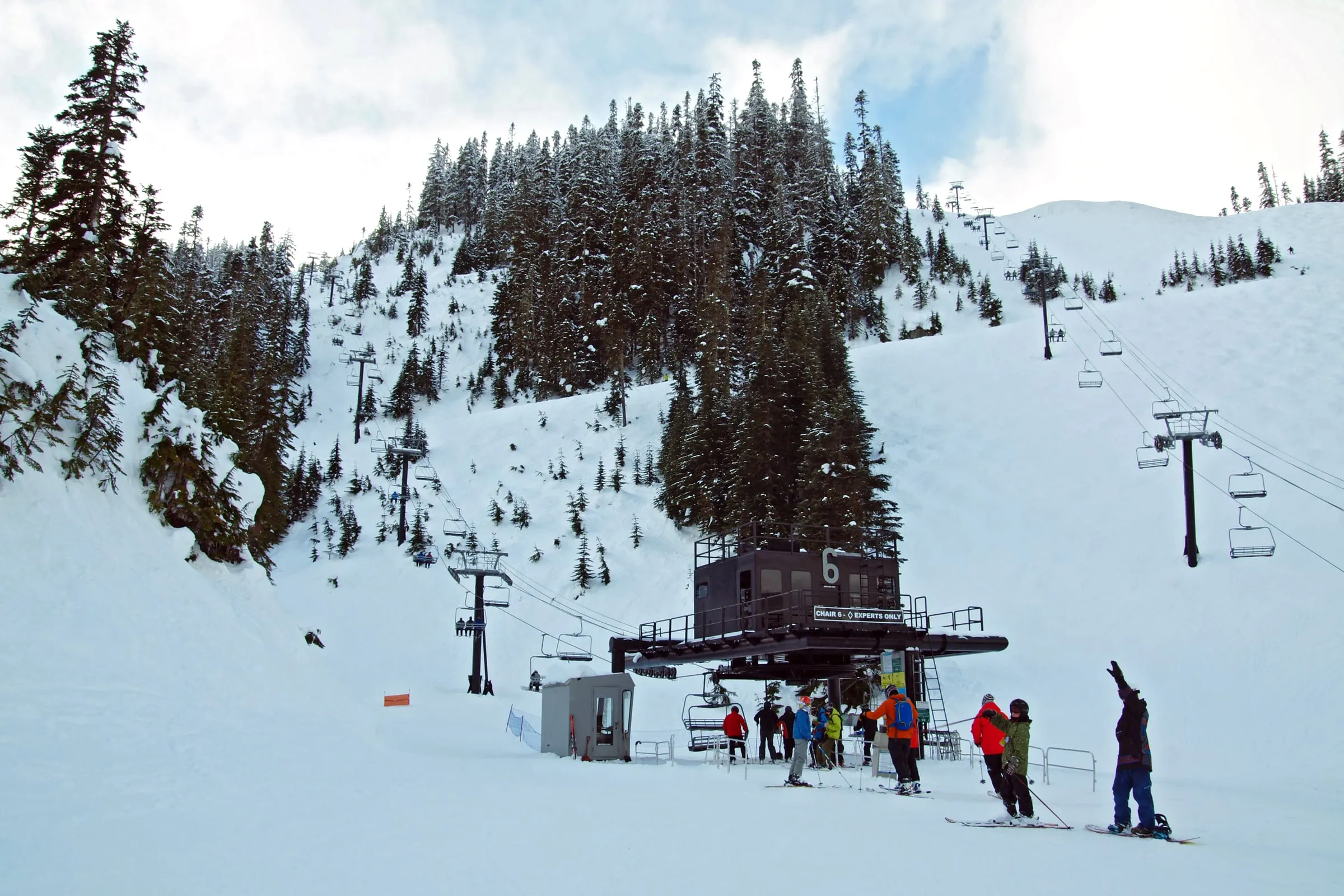 The bottom of a lift is where partners get separated, and where Baugher found some of them waiting while the other was immersed a few hundred metres uphill. Photo: kallerna, CC BY-SA 3.0, via Wikimedia Commons. Edited.

Can you get yourself out?
Usually not. In a controlled experiment at Crystal Mountain on March 19, 2006, volunteers were placed inverted in tree wells at burial depths up to 1.5 metres, and self-extrication “ranged from very difficult to impossible.” In a comparable Canadian experiment at Blackcomb, none of the subjects freed themselves. And none of the Crystal subjects lasted to the two-minute mandatory removal time.
Two minutes, with a safety team standing over them, in a planned experiment. That is the number that reframes everything else on this page. The realistic plan is not escaping — it is protecting an airway long enough for someone who saw you go in to reach you.
| If you go in | If your partner goes in |
|---|---|
| Yell or use a whistle immediately | Do not leave to get help. Stay and dig |
| Do anything to keep your head above the surface — roll, grab branches, grab the trunk | Call or whistle for more help; phone patrol if you have signal |
| If immersed, make space around your face and protect the airway | Go straight for the airway, clear it and keep it clear |
| Stop struggling once trapped; it collapses your air space | Do not pull them out the way they went in — find the head and tunnel in from the side |
| Stay calm, conserve air, trust your partner is coming | Widen the tunnel to extricate; avoid knocking more snow into the hole |
Those come from the deepsnowsafety.org guidance and Baugher’s prevention list. Two more from the same source that cost nothing: look at the gaps between the trees rather than at the trees, and do not use pole straps.
Has this actually happened at Mt. Baker?
Yes, in both directions — one death and one rescue, three months apart, and the pair of them teach the whole lesson. On December 10, 2022, William Kamphausen, 44, of Bellingham was found unresponsive in deep snow near the Panorama Dome at around 11:15 a.m. by a group of riders who spotted part of his snowboard above the surface. Ski area CEO Gwyn Howat told the Mount Baker Experience it was “not an avalanche or tree well incident, but a deep snow immersion,” and that he appeared to have been riding alone and had not been reported missing.
On March 3, 2023, snowboarder Ian Steger went headfirst into a tree well in the backcountry beyond the ski area under several feet of snow, separated from his group and unable to reach his radio. A passing skier, Francis Zuber, saw a red snowboard sticking out of the snow, dug his face clear by hand and finished with the shovel from his pack. Cascadia Daily News reported the two have been friends since. Zuber’s summary of the hazard was two words: “silent killer.”
The difference between those two outcomes was not gear or skill. It was whether somebody happened to be looking.
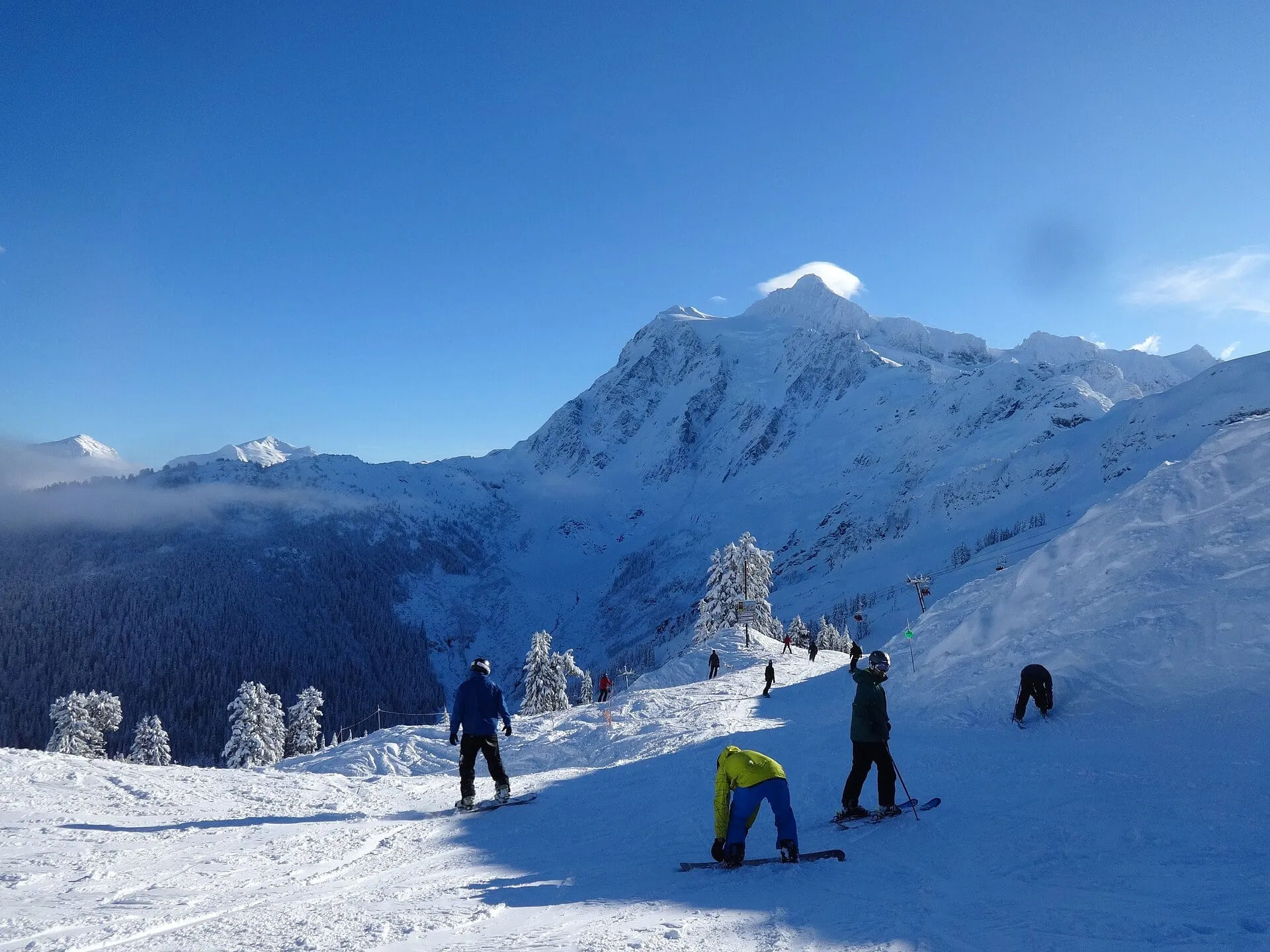 Partner contact is a skill, not a sentiment: stop where you can see each other, agree the next meeting point before you drop in, and treat a lost sightline as an emergency. Photo: Kaleodu, CC0, via Wikimedia Commons.

Does any of this change if you stay out of the trees?
Mostly, yes — and that is the honest headline for most visitors. Staying on groomed runs is the ski area’s own first recommendation, and it removes nearly all of this risk. You do not need to be an expert to ski here safely; you need to decide deliberately when you leave the corduroy, rather than drifting off it one turn at a time.
If you do want the tree skiing Baker is loved for, the equipment list is short and none of it is exotic: a partner you can actually see, a whistle, a phone with patrol’s number already in it, and a shovel if you own one. Our beginner’s guide to the mountain covers the terrain itself, and what the avalanche forecast does and does not cover handles everything past the rope line.
 Past the boundary, at Artist Point, the ski area’s own wording is “TREAT THIS AREA LIKE BACKCOUNTRY AT ALL TIMES” — no patrol, no medical response, and the March 2023 rescue above happened out here. Photo: U.S. Forest Service, Pacific Northwest Region (public domain).
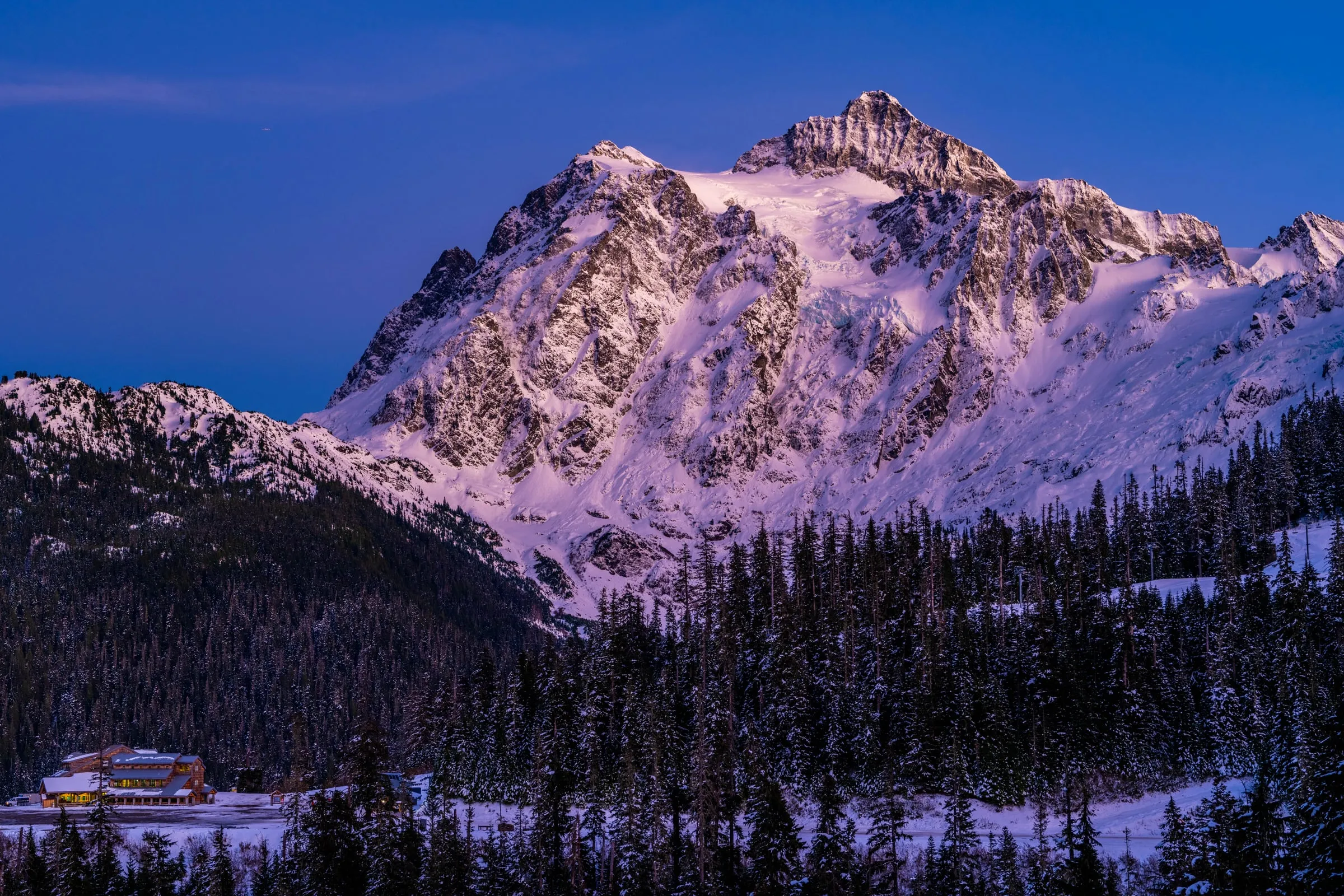 Patrol’s phone is monitored to about 4 p.m. and the light goes early here in midwinter — the last run of the day is the one to ski with the most company, not the least. Photo: BiggusDiccus, CC BY-SA 4.0, via Wikimedia Commons. Edited.

Where we would put you
Forty minutes below the lifts, with somewhere warm to talk the day over. The Black Cedar is about 40 minutes from the ski area and 10 from Glacier, with a cedar barrel sauna and a hot tub for legs that spent the day in heavy snow. The Little Red Cabin in Maple Falls is 45 minutes out and 15 from Glacier, and it is the cheaper of the two for the extra quarter hour.
The practical reason we mention it on a safety page: groups that stay together in one place tend to ski together, and the single most protective thing on this entire page is skiing with someone who will notice you are gone. If you are still choosing a base, our Mt. Baker lodging guide lays out the options along the corridor, and the road conditions page covers the drive that gets you there.
Sources
- Paul Baugher, Snow Immersion Suffocation — The Silent Killer at Ski Areas, Proceedings of the 2012 International Snow Science Workshop, Anchorage
- Mt. Baker Ski Area, tree well advisory, deep snow advisory, tree well and deep snow safety, mountain safety, mountain stats and snow report — all checked November 24, 2026
- deepsnowsafety.org, including its what to do guidance
- Northwest Avalanche Center for conditions beyond the ski area boundary
- Mount Baker Experience, Snowboarder dies in deep snow immersion at Mt. Baker Ski Area, December 13, 2022
- Cascadia Daily News, Friendship blossoms after harrowing Mount Baker rescue, April 4, 2023